🎨 Dua Card Builder
Create Black & White personalised Islamic dua cards to download, print, or share online for free.
📥 پی ڈی ایف ڈاؤن لوڈ کریں
Download these duas as a free PDF for free.
📖 Dua Hub
Explore 100+ authentic duas with translations, references, and free printable PDFs.
What this guide covers
Related pages on this site
- If you have not yet booked your Rawdah permit, read our complete guide first: Rawdah Permit — Complete Booking Guide (Nusuk & Tawakalna)
- Need a dua for a different situation?
Our comprehensive Rawdah Duas Hub organizes authentic Islamic supplications into easy-to-find categories. Whether you’re making dua for your mother, father, deceased parents, marriage, children, family, health, forgiveness, rizq, protection, or guidance, you’ll find dedicated articles with authentic references, Arabic text, transliteration, English translation, and Urdu.
Visit the hub to discover the complete collection and prepare the right duas before your visit to the blessed Rawdah.
Why the Rawdah is the Most Blessed Place to Make Dua
Before you enter the Rawdah, it is important to understand why this specific space carries such profound spiritual weight. This understanding will transform your visit from a physical experience into a deeply spiritual one. If you want the background first, read what is the Rawdah.
“What is between my house and my pulpit is a garden from the gardens of Paradise, and my pulpit is upon my fountain (Hawd).”
— Sahih al-Bukhari, Hadith 1196 — narrated by Abu Hurairah (RA)
This hadith is the foundation of everything. The Prophet Muhammad ﷺ himself described this area as a garden — Riyazul Jannah — from the gardens of Paradise. Scholars of Islam have understood this in two ways: either the physical space will be transported to Paradise on the Day of Judgement, or that praying here carries the spiritual weight and reward equivalent to praying in a garden of Paradise.
Either interpretation points to the same truth — this is not ordinary ground. When you stand on that green carpet, you are standing in a space the Prophet ﷺ himself identified as sacred, between his home and his pulpit, where he led prayer, received revelation, and taught his companions.
“Make dua with certainty that Allah will answer, and know that Allah does not answer the dua of a heart that is heedless and distracted.”
— Tirmidhi, Hadith 3479
This is why preparation matters so much. You may only have 10 to 15 minutes inside. A heart that has prepared — that arrives with a list of sincere duas, in a state of wudhu, focused and present — will leave with far more than a heart that arrived unprepared and spent the time looking around.
روضہ میں داخل ہونے سے پہلے خود کو کیسے تیار کریں
اکثر زائرین مکمل توجہ پرمٹ حاصل کرنے اور وقت پر پہنچنے پر مرکوز رکھتے ہیں۔ بہت کم لوگ اس پر توجہ دیتے ہیں جو سبز قالین پر قدم رکھنے سے پہلے ہوتا ہے۔ یہی تیاری اس زیارت کو الگ کرتی ہے جو آپ کی زندگی بدل دیتی ہے، اس سے جسے آپ بمشکل یاد رکھتے ہیں۔
1. پہنچنے سے پہلے وضو کر لیں
وضو مسجد پہنچنے تک موخر نہ کریں۔ اپنے ہوٹل میں یا قطار میں شامل ہونے سے پہلے وضو کی سہولیات پر کر لیں۔ آپ چاہتے ہیں کہ دروازے پر پرسکون، روحانی طور پر تیار اور جلدی کے بغیر پہنچیں۔ طہارت کی حالت میں پہنچنا ہر چیز کی بنیاد ہے۔
2. اپنی دعائیں لکھ لیں — یادداشت پر بھروسہ نہ کریں
یہ اس رہنمائی کا سب سے اہم مشورہ ہے۔ جب آپ روضہ کے اندر قدم رکھتے ہیں اور جہاں آپ ہیں اس کی حقیقت آپ پر اثر کرتی ہے، تو جذبات آپ پر غالب آ جائیں گے۔ جو زائرین درجنوں بار جا چکے ہیں وہ بھی بتاتے ہیں کہ وہ اب بھی مغلوب محسوس کرتے ہیں۔ اگر آپ صرف یادداشت پر بھروسہ کرتے ہیں، تو آپ آدھا بھول جائیں گے جو آپ مانگنا چاہتے تھے۔ اپنی دعائیں چھوٹی نوٹ بک میں یا فون کے نوٹس میں لکھیں۔ انہیں زمروں میں ترتیب دیں: خود، والدین، بچے، صحت، رزق، رہنمائی، آخرت۔ اندر آپ صرف فہرست کھولتے ہیں اور دل سے دعا کرتے ہیں۔
3. داخل ہونے سے پہلے کثرت سے درود بھیجیں
مسجد نبوی سے روضہ کی طرف چلتے ہوئے اپنی زبان درود سے بھر لیں۔ یہ عبادت بھی ہے اور روحانی تیاری بھی۔ نبی ﷺ نے فرمایا کہ جو شخص ان پر ایک درود بھیجتا ہے، اللہ اس پر دس رحمتیں بھیجتا ہے۔ اپنی زیارت کا آغاز رحمت کی حالت میں کریں۔
4. اپنے وقت سے پہلے پہنچیں
اپنے مقررہ وقت سے کم از کم 10 سے 15 منٹ پہلے پہنچیں۔ اس سے آپ کو پرسکون ہونے، صحیح دروازہ تلاش کرنے اور سکون سے داخل ہونے کا وقت ملتا ہے۔ آخری لمحے میں دروازے کی طرف جلدی کرنا مطلب ہے کہ آپ بکھرے ہوئے ذہن کے ساتھ روضہ میں داخل ہوں۔
5. اپنی نیت (نیت) مقرر کریں
داخل ہونے سے پہلے واضح نیت کریں۔ آپ یہاں کیوں ہیں؟ آپ کیا مانگ رہے ہیں؟ آپ کس کے لیے دعا کر رہے ہیں؟ واضح نیت دل کو مرکوز کرتی ہے اور دعا کو زیادہ خلوص والی بناتی ہے۔ آپ دل میں کہہ سکتے ہیں: ‘میں نبی ﷺ کے روضہ میں دو رکعت پڑھنے، درود بھیجنے، اور اپنے لیے، اپنے خاندان اور تمام مسلمانوں کے لیے خلوص والی دعا کرنے کے لیے داخل ہو رہا ہوں۔’
زیارت کے دن سے پہلے یہ تیار کر لیں
- تحریری دعا فہرست — زمرہ بندی کے ساتھ (خود، والدین، بچے، صحت، رزق، آخرت)
- تازہ وضو — مسجد پہنچنے تک موخر نہ کریں
- فون خاموش اور نوٹیفکیشن بند، مسجد نبوی میں داخل ہونے سے پہلے
- پرمٹ سے داخلے کا دروازہ نمبر یاد رکھیں — دروازہ 37 — جنوبی صحن، مردوں اور خواتین کے لیے ان کے اپنے اوقات میں
- آرام دہ باادب لباس — آپ 10–15 منٹ تک قالین پر کھڑے یا بیٹھے رہ سکتے ہیں
قدم بہ قدم: روضہ کے اندر کیا کریں
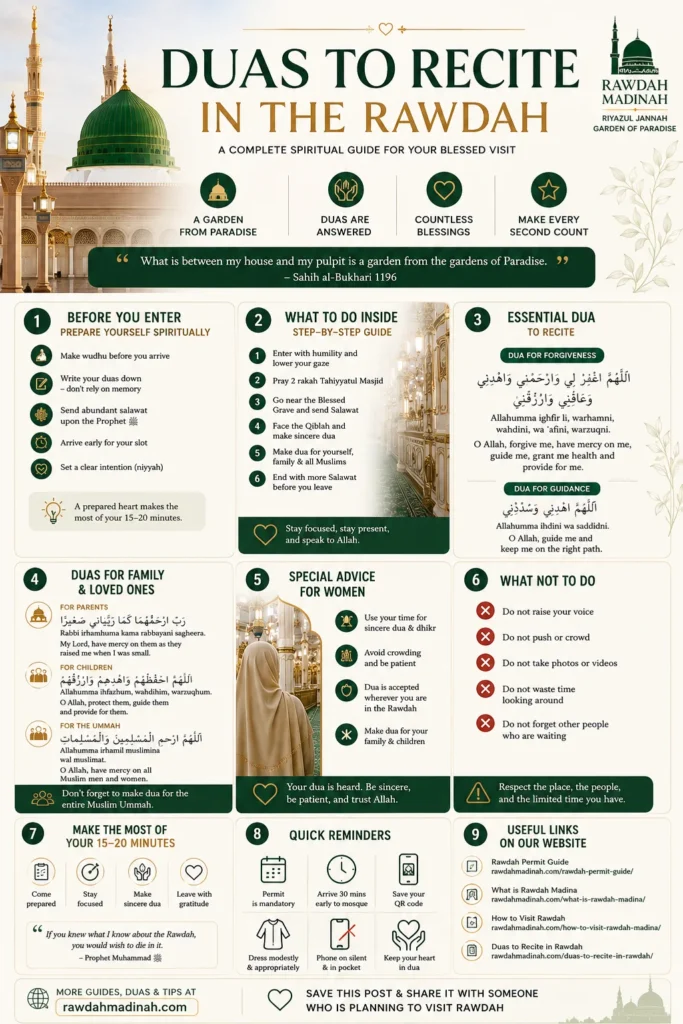
جب آپ داخل ہوتے ہیں تو ایک خاتون محافظ آپ کو روضہ کے سبز قالین والے حصے کی طرف رہنمائی کرے گی۔ آپ کے پاس تقریباً 10 سے 15 منٹ ہوں گے۔ مکمل ترتیب یہ ہے:
قدم 1 — سبز قالین پر قدم رکھیں
سبز قالین پر قدم رکھیں اور ایک لمحہ رک جائیں۔ نظر نیچی کریں۔ جہاں آپ ہیں اسے تسلیم کریں۔ اس بابرکت جگہ کی حقیقت کو اپنے دل میں بسنے دیں اس سے پہلے کہ آپ کچھ اور کریں۔
قدم 2 — درود بھیجیں
فوراً نبی ﷺ پر درود بھیجیں۔ درود ابراہیمی سے شروع کریں (وہ درود جو نماز میں پڑھا جاتا ہے)۔ یہ ہر چیز کا آغاز ہے جو آپ یہاں کریں گے۔
قدم 3 — دو رکعت نفل پڑھیں
اگر جگہ ہو تو دو رکعت نفل (اختیاری) نماز پڑھیں۔ ریاض الجنہ کے اندر نفل نماز کا ثواب بے حساب ہے۔ اگر جگہ نہ ہو تو قدم 4 پر چلے جائیں۔
Pray two rakah first: Nafl prayer in the Rawdah.
قدم 4 — اپنی دعا فہرست کھولیں
اپنی دعا فہرست کھولیں۔ خلوص سے اور دل سے دعا کرنا شروع کریں۔ ہاتھ اٹھائیں۔ اللہ سے براہ راست بات کریں کسی بھی زبان میں — عربی، اردو، انگریزی، جو بھی دل سے سب سے قدرتی طور پر آئے۔
قدم 5 — اپنے زمرے مکمل کریں
اپنے زمروں سے گزریں: پہلے خود، پھر والدین، پھر بچے، پھر خاندان، پھر تمام مسلمان۔ جلدی نہ کریں۔ ہر دعا آہستہ اور اس یقین کے ساتھ بولیں کہ وہ قبول ہوگی۔
قدم 6 — درود سے اختتام کریں
نبی ﷺ پر دوبارہ درود کے ساتھ اختتام کریں۔ جیسے آپ نے شروع کیا تھا ویسے ہی ختم کریں — اس کی تعریف اور برکتوں کے ساتھ جن کی موجودگی میں آپ کھڑے ہیں۔
قدم 7 — آپ کا وقت ختم ہو رہا ہے
جب خاتون محافظ اشارہ کرے کہ آپ کا وقت ختم ہو رہا ہے، تو سکون اور شکر کے ساتھ نکلیں۔ جلدی یا پریشانی محسوس نہ کریں۔ آپ زمین کی سب سے بابرکت جگہوں میں سے ایک میں تھے۔
ہر حصہ کتنا وقت لیتا ہے؟
- رکنا اور تسلیم کرنا — 30 سیکنڈ سے 1 منٹ
- ابتدائی درود — 1 سے 2 منٹ
- دو رکعت نفل نماز — 3 سے 5 منٹ
- اپنی فہرست سے ذاتی دعائیں — 8 سے 12 منٹ
- اختتامی درود — 1 منٹ
- کل: اگر آپ تیار ہیں تو 10 سے 15 منٹ میں آرام سے مکمل ہو جاتا ہے۔
Take these duas into the Rawdah with you. Our free Wird app shows one dua per screen in large IndoPak Arabic, in the right order, with the names you promised to pray for. It works offline inside Masjid an-Nabawi. See the free Wird app →
Daily adhkar: read the authentic morning and evening adhkar with Arabic, transliteration, English and Urdu, and how many times to read each one.
Salawat Upon the Prophet ﷺ — What to Recite
Salawat (sending blessings and peace upon the Prophet ﷺ) is the most appropriate act to perform inside the Rawdah. You are standing between his home and his pulpit — sending salawat here carries extraordinary weight.
Durood Ibrahim — The Salawat of Prayer
This is the salawat recited in every salah. Begin with this:
اَللّٰهُمَّ صَلِّ عَلَى مُحَمَّدٍ وَعَلَى آلِ مُحَمَّدٍ، كَمَا صَلَّيْتَ عَلَى اِبْرَاهِيمَ وَعَلَى آلِ اِبْرَاهِيمَ، اِنَّكَ حَمِيدٌ مَجِيدٌ. اَللّٰهُمَّ بَارِكْ عَلَى مُحَمَّدٍ وَعَلَى آلِ مُحَمَّدٍ، كَمَا بَارَكْتَ عَلَى اِبْرَاهِيمَ وَعَلَى آلِ اِبْرَاهِيمَ، اِنَّكَ حَمِيدٌ مَجِيدٌ
Allahumma salli ‘ala Muhammadin wa ‘ala aali Muhammad, kama sallayta ‘ala Ibrahima wa ‘ala aali Ibrahim, innaka Hameedun Majeed. Allahumma barik ‘ala Muhammadin wa ‘ala aali Muhammad, kama barakta ‘ala Ibrahima wa ‘ala aali Ibrahim, innaka Hameedun Majeed.
“O Allah, send Your mercy upon Muhammad and upon the family of Muhammad, as You sent Your mercy upon Ibrahim and upon the family of Ibrahim. Truly You are Praiseworthy and Glorious. O Allah, send Your blessings upon Muhammad and upon the family of Muhammad, as You sent Your blessings upon Ibrahim and upon the family of Ibrahim. Truly You are Praiseworthy and Glorious.”
— Sahih al-Bukhari
Short Salawat — Repeat Abundantly
Between your duas, fill any pauses with this short form of salawat:
صَلَّى اللهُ عَلَيْهِ وَسَلَّمَ
Sallallahu ‘alayhi wa sallam
“May Allah’s peace and blessings be upon him”
— Sahih al-Bukhari
“Whoever sends one salawat upon me, Allah will send ten mercies upon him, erase ten of his sins, and raise him ten degrees.”
— Sunan al-Nasa’i, Hadith 1297
روضہ کے اندر پڑھنے کی مکمل دعائیں
یہ روضہ کے اندر کرنے کی سب سے اہم دعائیں ہیں۔ یہ قرآن اور صحیح سنت سے لی گئی ہیں — وہ سب سے طاقتور الفاظ جو آپ اس بابرکت جگہ میں اللہ کے سامنے لا سکتے ہیں۔ تمام دعائیں عربی، تلفظ اور انگریزی ترجمہ میں دی گئی ہیں۔
مغفرت کے لیے دعا — سید الاستغفار
مغفرت مانگنے سے شروع کریں۔ یہ سید الاستغفار ہے — تمام استغفار دعاؤں کا سردار، جیسا کہ نبی ﷺ نے بیان فرمایا:
اَللّٰهُمَّ اَنْتَ رَبِّي لَا اِلَهَ اِلَّا اَنْتَ، خَلَقْتَنِي وَأَنَا عَبْدُكَ، وَأَنَا عَلَى عَهْدِكَ وَوَعْدِكَ مَا اسْتَطَعْتُ، اَعُوذُ بِكَ مِنْ شَرِّ مَا صَنَعْتُ، اَبُوءُ لَكَ بِنِعْمَتِكَ عَلَيَّ وَأَبُوءُ لَكَ بِذَنْبِي فَاغْفِرْ لِي فَإِنَّهُ لَا يَغْفِرُ الذُّنُوبَ اِلَّا اَنْتَ
Allahumma anta Rabbi la ilaha illa anta, khalaqtani wa ana abduka, wa ana ‘ala ‘ahdika wa wa’dika mastata’tu, a’udhu bika min sharri ma sana’tu, abu’u laka bi ni’matika ‘alayya wa abu’u laka bi dhanbi faghfir li fa innahu la yaghfirudh-dhunuba illa ant.
“O Allah, You are my Lord, there is no god but You. You created me and I am Your servant, and I am keeping my covenant and promise to You as best I can. I seek refuge in You from the evil of what I have done. I acknowledge Your blessing upon me and I acknowledge my sin — so forgive me, for there is none who forgives sins except You.”
— Sahih al-Bukhari, Hadith 6306
دنیا اور آخرت کے لیے دعا — مکمل دعا
یہ دعا، جو نبی ﷺ اکثر پڑھتے تھے، مومن کو اس زندگی اور آخرت میں درکار ہر چیز کا احاطہ کرتی ہے:
رَبَّنَا آتِنَا فِي الدُّنْيَا حَسَنَةً وَفِي الْآخِرَةِ حَسَنَةً وَقِنَا عَذَابَ النَّارِ
Rabbana atina fid-dunya hasanatan wa fil-akhirati hasanatan wa qina ‘adhab an-nar.
“Our Lord, give us good in this world and good in the Hereafter, and protect us from the punishment of the Fire.”
— Quran 2:201 — Sahih al-Bukhari, Hadith 4522
صراط مستقیم پر ہدایت کے لیے دعا
بہت طاقتور دعا جو ہم اپنی ہر نماز میں روزانہ پڑھتے ہیں۔
اهْدِنَا الصِّرَاطَ الْمُسْتَقِيمَ
Ihdinas-siratal mustaqeem.
“Guide us to the straight path.”
— Quran 1:6 — recite this with the full awareness of where you are standing
والدین کے لیے دعا
روضہ میں آپ جو سب سے محبوب کام کر سکتے ہیں ان میں سے ایک اپنے والدین کے لیے دعا کرنا ہے — زندہ ہوں یا فوت شدہ۔ یہ عمل عزت اور شکر گزاری کی اعلیٰ ترین صورتوں میں سے ہے:
رَبِّ اغْفِرْ لِي وَلِوَالِدَيَّ وَارْحَمْهُمَا كَمَا رَبَّيَانِي صَغِيرًا
Rabbighfir li wa li-walidayya warhamhuma kama rabbayani sagheera.
“My Lord, forgive me and my parents, and have mercy on them as they raised me when I was small.”
— Quran 17:24
صحت اور تندرستی کے لیے دعا — ایوب (علیہ السلام) کی دعا
رَبِّ اِنِّي مَسَّنِيَ الضُّرُّ وَأَنْتَ اَرْحَمُ الرَّاحِمِينَ
Rabbi inni massaniyad-durru wa anta arhamur-rahimeen.
“My Lord, indeed adversity has touched me, and You are the Most Merciful of the merciful.”
— Quran 21:83 — the prayer of Prophet Ayyub (AS) in his greatest trial
رزق اور روزی کے لیے دعا
اَللّٰهُمَّ اكْفِنِي بِحَلَالِكَ عَنْ حَرَامِكَ وَأَغْنِنِي بِفَضْلِكَ عَمَّنْ سِوَاكَ
Allahummak-fini bi-halalika ‘an haramika wa aghnini bi-fadlika ‘amman siwak.
“O Allah, suffice me with what You have made lawful so that I have no need for what You have made unlawful, and enrich me by Your grace so that I have no need of anyone other than You.”
— Tirmidhi, Hadith 3563 — classified as Hasan
نیک شریک حیات اور بچوں کے لیے دعا
رَبَّنَا هَبْ لَنَا مِنْ اَزْوَاجِنَا وَذُرِّيَّاتِنَا قُرَّةَ اَعْيُنٍ وَاجْعَلْنَا لِلْمُتَّقِينَ اِمَامًا
Rabbana hab lana min azwajina wa dhurriyyatina qurrata a’yunin waj’alna lil-muttaqina imama.
“Our Lord, grant us from among our spouses and offspring comfort to our eyes and make us a leader for the righteous.”
— Quran 25:74
تمام حرام سے حفاظت کے لیے دعا — صبح و شام کی اذکار
بِسْمِ اللَّهِ الَّذِي لَا يَضُرُّ مَعَ اسْمِهِ شَيْءٌ فِي الْأَرْضِ وَلَا فِي السَّمَاءِ وَهُوَ السَّمِيعُ الْعَلِيمُ
Bismillahil-ladhi la yadurru ma’asmihi shay’un fil-ardi wa la fis-sama’i wa huwa-s-sami’ul-‘aleem.
“In the name of Allah, with whose name nothing on earth or in heaven can cause harm, and He is the All-Hearing, All-Knowing.”
— Abu Dawud, Hadith 5088 — recited 3 times
جنت میں داخلے کے لیے دعا — نبی ﷺ کی دعا
اَللّٰهُمَّ اِنِّي اَسْأَلُكَ الْجَنَّةَ وَأَعُوذُ بِكَ مِنَ النَّارِ
Allahumma inni as’alukal-jannata wa a’udhu bika minan-nar.
“O Allah, I ask You for Paradise and I seek refuge in You from the Fire.”
— Abu Dawud, Hadith 792
مخصوص ضروریات کے لیے خاص دعائیں
اگر آپ قرض میں ہیں یا مالی مشکل میں ہیں
For the full dua and its benefits, see our dua for debt.
اَللّٰهُمَّ اِنِّي اَعُوذُ بِكَ مِنَ الْهَمِّ وَالْحَزَنِ، وَأَعُوذُ بِكَ مِنَ الْعَجْزِ وَالْكَسَلِ، وَأَعُوذُ بِكَ مِنَ الْجُبْنِ وَالْبُخْلِ، وَأَعُوذُ بِكَ مِنْ غَلَبَةِ الدَّيْنِ وَقَهْرِ الرِّجَالِ
Allahumma inni a’udhu bika minal-hammi wal-hazan, wa a’udhu bika minal-‘ajzi wal-kasal, wa a’udhu bika minal-jubni wal-bukhl, wa a’udhu bika min ghalabatid-dayni wa qahrir-rijal.
“O Allah, I seek refuge in You from worry and grief, from weakness and laziness, from cowardice and miserliness, and from the burden of debt and the oppression of men.”
— Sahih al-Bukhari, Hadith 2893
اگر آپ اولاد چاہتے ہیں
رَبِّ لَا تَذَرْنِي فَرْدًا وَأَنْتَ خَيْرُ الْوَارِثِينَ
Rabbi la tadhharni fardan wa anta khayrul-waritheen.
“My Lord, do not leave me childless, though You are the best of inheritors.”
— Quran 21:89 — the dua of Prophet Zakariyya (AS)
اگر آپ غم میں ہیں یا مشکل سے گزر رہے ہیں
حَسْبُنَا اللَّهُ وَنِعْمَ الْوَكِيلُ
Hasbunallahu wa ni’mal-wakeel.
“Allah is sufficient for us, and He is the best Disposer of affairs.”
— Quran 3:173 — recited by Ibrahim (AS) when thrown into the fire
فوت شدہ والدین اور پیاروں کے لیے دعا
روضہ میں آپ جو سب سے طاقتور کام کر سکتے ہیں ان میں سے ایک ان کے لیے دعا کرنا ہے جو انتقال کر چکے ہیں۔ سورۃ الفاتحہ پڑھیں اور اس کا ثواب ان کو ہدیہ کریں، پھر کہیں:
اَللّٰهُمَّ اغْفِرْ لَهُمْ وَارْحَمْهُمْ وَعَافِهِمْ وَاعْفُ عَنْهُمْ
Allahummaghfir lahum warhamhum wa ‘afihim wa’fu ‘anhum.
“O Allah, forgive them, have mercy on them, grant them wellbeing, and pardon them.”
— Muslim, Hadith 963
روضہ کی زیارت کرنے والی خواتین کے لیے خاص نوٹ
- خواتین کے پاس اکثر زیارت کے کم وقت اور بعض اوقات زیادہ محدود جگہ ہوتی ہے۔ اپنی دعائیں اور بھی احتیاط سے تیار کریں۔
- اس رہنمائی کی دعائیں تمام مسلمانوں کے لیے برابر ہیں — اس میں کوئی فرق نہیں کہ خواتین کیا مانگ سکتی ہیں۔
- اگر آپ روضہ کے اندر جذباتی ہو جائیں تو اسے دبائیں نہیں۔ تاریخ کی بہت سی عظیم دعائیں آنسوؤں کے ذریعے کی گئیں۔
- اپنی دعائیں آہستہ پڑھیں — دل میں سرگوشی بھی اللہ سنتا ہے۔
- اگر جگہ یا وقت کی کمی کی وجہ سے آپ دو رکعت نہ پڑھ سکیں تو صرف جہاں کھڑی ہیں وہیں سے دعا کریں — یہ بھی برابر قبول ہے۔
What Not to Do Inside the Rawdah
These are the most common mistakes pilgrims make — understanding them beforehand will help you avoid them and protect the quality and sincerity of your visit:
- Taking photos or videos — this is not prohibited inside the Rawdah but will result in being asked to leave. Keep your phone in your pocket.
- Making dua loudly — this disturbs others and is contrary to the etiquette of the space. Keep your voice to a whisper or make silent dua in your heart.
- Rushing through duas without focus — 10-15 minutes of sincere, focused dua is worth infinitely more than 15 minutes of distracted, rushed supplication.
- Spending time looking around instead of making dua — you are not here as a tourist. Lower your gaze, focus on Allah, and use every second.
- Pushing or rushing other pilgrims — the guards will manage the flow. Trust the system and move calmly.
- Forgetting to make dua for others — many pilgrims only make dua for themselves. Making dua for your parents, children, and all Muslims is one of the highest acts here.
- Arriving without wudhu — while wudhu is not strictly required for dua, being in a state of purity is strongly recommended, especially for prayer.
- Leaving without sending final salawat — always close your visit by sending peace and blessings upon the Prophet ﷺ in whose blessed proximity you stand.
What to Do After Leaving the Rawdah
Your visit to the Rawdah does not end when you step off the green carpet. Here is how to carry the experience forward:
- Find a quiet corner of Masjid Nabawi and continue your duas. The spiritual state you leave the Rawdah in is precious — extend it as long as you can.
- Perform your next salah inside Masjid Nabawi. One prayer here is worth 1,000 prayers elsewhere (Sahih al-Bukhari, Hadith 1190).
- Visit the salaam area near the Prophet’s grave ﷺ and send your salutations if you have not done so. Say: ‘Assalamu alayka ya Rasulallah wa rahmatullahi wa barakatuh.’
- Make a commitment — write down one change you will make in your life as a result of this visit. A changed action is the truest sign of a dua made with sincerity.
- Share the duas from this guide with family and friends who are planning to visit — the reward for teaching goodness continues long after you have left.
“The best of deeds is to bring joy to the heart of a believer.”
— Al-Mu’jam al-Awsat, Al-Tabarani — sharing this guide is an act of bringing joy